
7-Station SMT Production Line: Process & Equipment Fully Explained
1. What Is a 7-Station SMT Production Line?
A 7-station SMT production line is a complete surface mount technology assembly line consisting of seven core processing stations connected by a conveyor system. Bare PCB panels enter one end and finished, tested, depaneled boards exit the other.
The seven stations, in process order, are:
- Loader — feeds bare PCB panels into the line
- Solder Paste Printer — applies solder paste to PCB pads
- SPI (Solder Paste Inspection) — inspects paste deposition quality
- Pick & Place Machine(s) — places components onto the PCB
- Reflow Oven — melts solder to form permanent joints
- AOI (Automated Optical Inspection) — inspects solder joint quality
- Depaneling / Testing — separates boards and performs electrical test
While the basic layout is standard, the specific equipment within each station varies enormously based on production volume, product complexity, and quality requirements. A line making simple LED driver boards looks very different from a line making 5G telecom boards.
2. The 7 Stations: Detailed Breakdown
Let's go through each station in detail, including key functions, equipment options, and what to look for when specifying your line.
1PCB Loader / Unloader
The loader (also called a magazine loader or stack loader) feeds bare PCB panels from a magazine rack into the conveyor system at the start of the line. At the end of the line, an unloader collects finished boards.
Key functions:
- Automatic PCB feeding and receiving
- Barcode reading for traceability
- Width adjustment for different board sizes
- SMEMA communication protocol for line integration
Equipment tiers: Basic single-magazine loaders ($1,500–$4,000) vs. multi-magazine loaders with automatic magazine change ($6,000–$15,000) for lights-out production.
2Solder Paste Printer
The printer is the first process-critical station. It applies solder paste to the PCB through a stencil—a thin metal sheet with precisely cut openings corresponding to each component pad.
Key functions:
- Stencil alignment (vision-based for high accuracy)
- Squeegee pressure and speed control
- Automatic stencil cleaning (dry, wet, vacuum)
- 2D or 3D print inspection
Equipment tiers:
- Entry-level semi-auto: Manual alignment, suitable for low volume ($3,000–$10,000)
- Mid-range auto: Vision alignment, auto-cleaning, for medium volume ($15,000–$50,000)
- High-end: Closed-loop feedback from SPI, 3D print verification, for high-volume/high-mix ($50,000–$150,000+)
Pro tip: The printer is responsible for 50–70% of all SMT defects. Do not skimp on this station.
3SPI (Solder Paste Inspection)
SPI uses 3D imaging to measure the volume, height, area, and alignment of every solder paste deposit after printing. It catches defects early—before components are placed—when rework is cheapest.
What SPI detects:
- Insufficient or excessive paste volume
- Paste bridges between pads
- Missing paste deposits
- Stencil misalignment (offset X/Y)
- Paste height variation
Equipment tiers:
- Inline 2D SPI: Area-only measurement, budget option ($10,000–$25,000)
- Inline 3D SPI: Full height/volume measurement, standard for quality lines ($25,000–$80,000)
- High-speed 3D SPI: Dual camera, faster cycle time for high-volume lines ($60,000–$120,000+)
4Pick & Place Machine
The mounter (pick-and-place machine) is the heart of the SMT line. It picks components from reels, trays, or sticks and places them precisely on the PCB at high speed.
Key specifications:
- CPH (Components Per Hour): The rated placement speed. Real-world throughput is typically 60–80% of rated CPH.
- Component range: From 01005 chips and 0.3mm-pitch BGAs to large connectors and odd-form components.
- Number of placement heads / nozzles: More heads = higher speed but more cost and maintenance.
- Feeder capacity: Number of component reels the machine can hold simultaneously.
Equipment tiers:
- Entry-level chip shooter: 10,000–30,000 CPH, for simple boards ($10,000–$40,000)
- Mid-range multi-function: 30,000–80,000 CPH, handles fine-pitch and large components ($40,000–$150,000)
- High-speed modular: 80,000–200,000+ CPH, multi-machine configurations ($100,000–$500,000+ per module)
High-volume lines often use two mounters in series: a high-speed chip shooter for small passives, followed by a precision multi-function mounter for ICs and odd-form parts.
5Reflow Oven
The reflow oven heats the assembled PCB to melt the solder paste and form permanent electrical and mechanical joints. The oven uses multiple temperature zones to create a controlled thermal profile—preheat, soak, reflow, and cool.
Key specifications:
- Number of zones: More zones = tighter profile control. Typical: 6–12 heating + 1–2 cooling.
- Conveyor width: Single lane, dual lane, or wide for large panels.
- Temperature uniformity: ±1–3°C across the board, depending on oven quality.
- Nitrogen capability: Inert atmosphere for fine-pitch or lead-free processes (optional).
Equipment tiers:
- Small bench / 5-zone oven: For R&D or very low volume ($3,000–$10,000)
- Mid-range 8-10 zone oven: Standard for most production ($15,000–$50,000)
- High-end 10-12+ zone oven: Nitrogen-capable, dual-lane, advanced profiling ($40,000–$120,000+)
6AOI (Automated Optical Inspection)
AOI inspects the board after reflow to detect solder joint defects and component placement errors. It uses high-resolution cameras and AI-based image processing to compare each board against a golden reference.
What AOI detects:
- Solder bridges and shorts
- Missing, wrong, or reversed components
- Tombstoning and billboarding
- Insufficient or excessive solder
- Component offset and skew
Equipment tiers:
- 2D AOI: Basic inspection, lower cost, higher false call rate ($8,000–$25,000)
- 3D AOI: Height measurement for coplanarity and solder volume ($25,000–$70,000)
- High-end 3D AOI: AI algorithms, faster speed, lower false calls ($60,000–$150,000+)
7Depaneling & Test Station
The final station separates the multi-panel array into individual boards (depaneling) and performs electrical testing (ICT and/or FCT) to verify functionality.
Depaneling options: V-groove cutter, router (curve), laser, or punch
Test options: ICT, FCT, or combined ICT+FCT
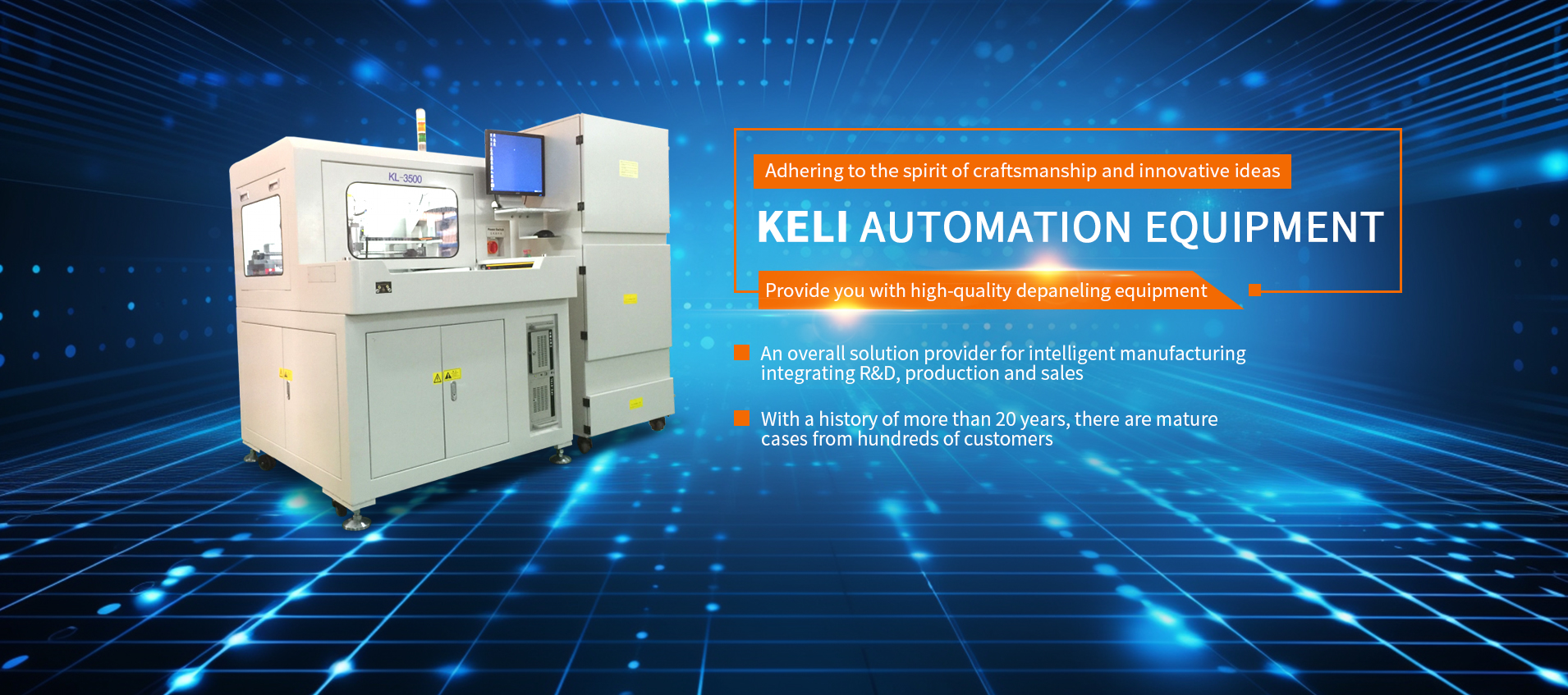
This station is where Keli Automation's 30-year fixture heritage and depaneling expertise really shine. We design and manufacture both the depaneling machines and the test fixtures in-house, ensuring seamless integration and single-source responsibility.
Equipment tiers:
- Basic: Manual depaneling + bench test fixture ($2,000–$10,000)
- Mid-range: Inline router depaneling + pneumatic FCT ($15,000–$60,000)
- High-end: Laser depaneling + inline ICT+FCT + automated handling ($50,000–$200,000+)
3. Complete Equipment Configuration List
The following table shows a typical mid-range 7-station SMT production line equipment configuration, suitable for medium-volume electronics manufacturing (10,000–50,000 boards/month):
| # | Station | Equipment | Key Spec |
|---|---|---|---|
| 1 | Loader | Automatic PCB magazine loader | Single magazine, SMEMA, 330mm width |
| 2 | Solder Paste Printer | Automatic vision printer | ±15µm accuracy, auto-clean, 330×450mm max PCB |
| 3 | SPI | Inline 3D SPI | 10µm resolution, full 3D measurement |
| 4 | Pick & Place | Multi-function mounter | 40,000 CPH, 0201–50mm component range, 80 feeders |
| 5 | Reflow Oven | 8-zone reflow oven | 8 heating + 2 cooling zones, ±2°C uniformity |
| 6 | AOI | 3D AOI | 15 MP camera, 3D height measurement |
| 7 | Depaneling + Test | Inline router + pneumatic FCT | Curve depaneling, custom FCT fixture |
| — | Conveyors & Buffers | Edge-rail conveyors | Motorized width adjustment, ESD-safe |
4. Capacity Calculation: What Throughput Can You Expect?
Line throughput is determined by the slowest station (the bottleneck). Here is how to calculate it:
Step-by-Step Calculation
- Calculate cycle time per board for each station:
- Printer: ~20–30 seconds per board
- SPI: ~15–25 seconds per board
- Mounter: (Components per board × 3,600) ÷ (Real-world CPH) = seconds per board
- Reflow: (Board length + gap) ÷ (Conveyor speed) — usually not the bottleneck
- AOI: ~15–40 seconds per board
- Identify the bottleneck station (longest cycle time)
- Calculate throughput: 3,600 ÷ bottleneck cycle time = boards per hour
- Multiply by availability: Typical SMT line availability = 75–90% (accounting for changeovers, breaks, maintenance)
Example Calculation
For a mid-range line assembling a 200-component board:
- Mounter CPH: 40,000 (rated) → 28,000 (real-world, 70% efficiency)
- Mounter cycle time: (200 × 3,600) ÷ 28,000 = 25.7 seconds
- Printer cycle time: 25 seconds
- AOI cycle time: 20 seconds
- Bottleneck: Mounter at 25.7 seconds/board
- Throughput: 3,600 ÷ 25.7 = 140 boards/hour
- At 80% availability: 140 × 0.8 × 8 hours = ~896 boards/day
Always calculate throughput for your specific board complexity—not just based on the mounter's rated speed. Component count, BGA complexity, and feeder changes all affect real-world speed.
5. Typical 7-Station SMT Line Pricing (2026 Estimates)
Prices vary widely based on brand, configuration, and features. The ranges below are rough estimates for a complete 7-station line, including conveyors and basic integration:
Entry-Level / Low-Volume Line
For startups, R&D labs, and very low-volume production (under 5,000 boards/month). Typically uses Chinese brand equipment with semi-automated operation.
- Semi-auto or low-end auto printer
- 2D SPI or skip SPI entirely
- Single mid-speed mounter (10k–30k CPH)
- 6-zone reflow oven
- 2D AOI or manual inspection
- Manual depaneling + test fixture
Mid-Range / Medium-Volume Line
The sweet spot for most EMS providers and OEMs (10,000–50,000 boards/month). Good quality equipment from established Chinese or Korean brands with full automation.
- Vision-based automatic printer
- Inline 3D SPI
- Multi-function mounter (30k–60k CPH) or dual-machine setup
- 8–10 zone reflow oven
- 3D AOI
- Inline depaneling + pneumatic FCT
High-End / High-Volume Line
For high-volume manufacturing (50,000+ boards/month), demanding industries (automotive, medical, aerospace), and complex high-density boards.
- Premium closed-loop printer from top-tier brand
- High-speed 3D SPI
- Dual-lane, multi-module mounter setup (100k–200k+ CPH)
- 10–12+ zone nitrogen-capable reflow oven
- AI-powered 3D AOI
- Laser depaneling + inline ICT+FCT + automated packaging
Note: Prices are approximate 2026 estimates for equipment only and do not include installation, training, spare parts, tooling, fixtures, software licensing, or facility costs. Premium brands (ASMPT, Yamaha, Fuji, Panasonic, Juki) are typically 2–5x more expensive than Chinese domestic brands.
6. How to Choose the Right SMT Line Configuration
With so many options, how do you choose the right line? Start with these five questions:
6.1 What is Your Production Volume?
Volume is the single biggest driver of line configuration. Higher volume justifies faster, more expensive equipment. Calculate your expected 12- to 24-month volume and size the line for the high end of that range.
6.2 How Complex Are Your Products?
Simple LED boards with 50 components need a very different line than server motherboards with 2,000 components and 10+ BGAs. Key complexity factors include:
- Component count (simple <200, medium 200–800, complex >800)
- Smallest component (0402 vs. 0201 vs. 01005)
- Fine-pitch components (BGA, QFP, CSP)
- Board size and layer count
- Odd-form components (connectors, transformers, heat sinks)
6.3 What Are Your Quality Requirements?
Higher quality requirements demand more inspection stations and more capable equipment. Automotive and medical lines need full 3D SPI + 3D AOI + ICT + FCT. Consumer electronics might get away with AOI + FCT only.
6.4 What is Your Product Mix?
High-mix / low-volume lines need quick changeover capabilities: motorized conveyor width, intelligent feeder carts, and fast program switching. High-volume / low-mix lines can be optimized for speed over flexibility.
6.5 What is Your Budget?
Be realistic about total cost of ownership, not just purchase price. Cheaper equipment may have lower uptime, higher maintenance cost, and worse resale value. Plan for 15–25% of the equipment cost for installation, training, spare parts, and first-year consumables.
7. Turnkey SMT Lines from Keli Automation
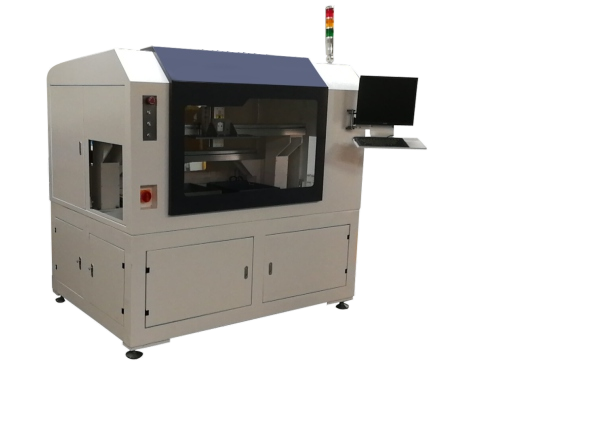
While Keli Automation is best known for our 30-year fixture heritage and depaneling machines, we also provide complete turnkey SMT production lines. What makes us different from other SMT line suppliers is our deep expertise in the back end of the line—the testing, depaneling, and post-reflow automation that most integrators treat as an afterthought.
Our SMT line services include:
- Complete line design and layout — customized for your product mix and volume
- Equipment sourcing and integration — we work with all major SMT equipment brands
- In-house depaneling and test equipment — Keli-built depanelers, testers, and fixtures
- Post-reflow automation expertise — cooling, AOI, ICT, FCT, aging, packaging
- Installation, training, and commissioning — on-site support until production is running
- After-sales service — spare parts, maintenance, and process optimization
Whether you need a single depaneling machine, a complete 7-station SMT line, or anything in between, Keli Automation can deliver a solution tailored to your needs. With 30+ years of experience, ISO 9001 certification, 20+ patents, and 300+ satisfied customers worldwide, we have the expertise to make your SMT line a success.
Planning Your SMT Production Line?
Tell us about your products and production goals. Our engineers will design a custom 7-station SMT line configuration with detailed equipment specs and pricing — free consultation.
Get Your Custom Line Design