
Key Takeaways
- Overview
- Practical guidance for PCB handling and line automation.
- Specifications below are taken from real Keli equipment.
Not every line needs more speed. Many need fewer stops. The KL-350D Single-Track PCB Buffer addresses the quiet interruptions that come from manual or inconsistent board handling.
Overview
The KL-350D buffers PCBs between SMT stations on a single track and releases them first-in-first-out. It absorbs differences in station cycle time and keeps the line running during short stops. A 750 W servo motor and ball screw drive the lift, and a PLC controls storage, release and alarms. This version has no link conveyor.
Design and Operation
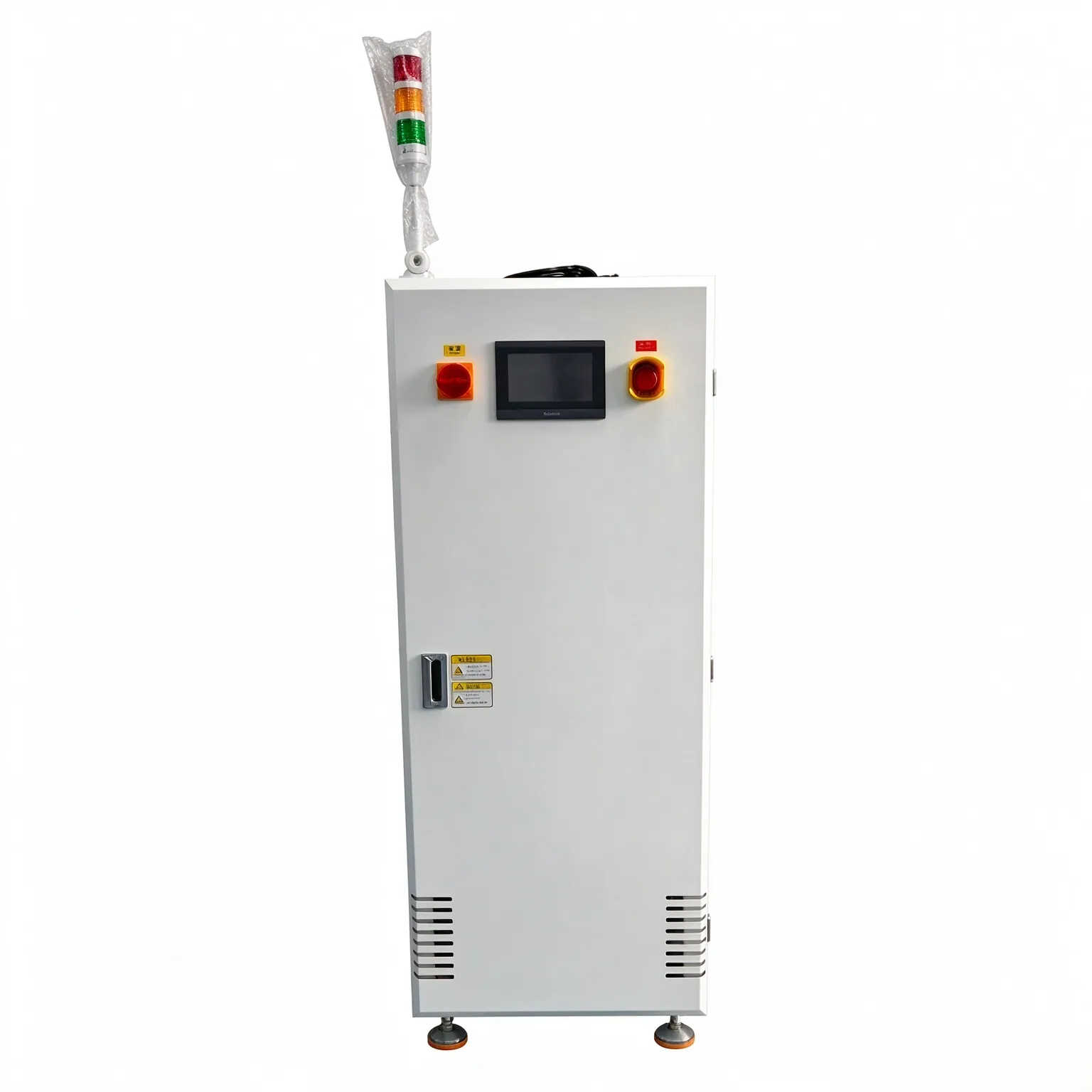
Setup is done at the control panel. The operator selects the board size, sets the pitch or rail width, and confirms the transfer direction. Once the recipe is saved, the same format can be recalled later without re-measuring, which shortens the next changeover.
Key Features
A few details are worth noting for anyone running the machine daily:
- 750 W servo motor and precision ball screw for lift
- W3 flat belts for stable board transport
- Single-track buffering with first-in-first-out control
- PLC control with automatic alarm function
- Board width range 50-350 mm; conveyor height 900 ±30 mm
Technical Specifications
The machine is built around the following working range:
- Lift Motor: 750 W servo motor
- Power Supply: 220 V, 50 Hz
- Board Size: Max. 500 mm length; 50-350 mm width
- Machine Dimensions (L x W x H): 600 x 1200 x 1700 mm
- Belt Pitch: 25 / 50 mm
Typical Applications
The system is well suited to the following environments:
- Line balancing in PCB assembly
- Buffering around inspection and test stations
- First-in-first-out board storage
- Single-lane buffering between SMT stations
Why It Matters
The cost of a stop is rarely just the minutes lost. Once a line pauses, work in progress shifts, downstream machines idle, and the schedule absorbs the disruption long after the line restarts.
The Payback Over Time
Maintenance teams tend to appreciate the change too. A machine that runs a fixed cycle is easier to service and to troubleshoot than a manual step whose timing changes with every operator.
Why Choose Keli
We set belt pitch and board width to your process. Each buffer is tested for FIFO control and alarms before shipment. Remote support and spare parts are provided.
We build board handling equipment for SMT lines and can adjust configuration to your process. Contact us with your requirements for a quote.