
Key Takeaways
- The trend: handling is part of line design
- Practical guidance for PCB handling and line automation.
- Specifications below are taken from real Keli equipment.
Board handling is no longer just the space between process machines. In many electronics plants, it now decides how steadily an SMT line runs. Purchasers, equipment engineers and system integrators are looking closely at PCB handling because product mixes are wider, boards are larger, and floor space is fixed. This article looks at the trend in context, where pressure appears on the factory floor, where automation fits, and how one combined loading and feeding unit can support that work.
The trend: handling is part of line design
Automation discussions often start with placement, printing, reflow or inspection. Yet board handling equipment sets the rhythm before and after each step. If infeed is irregular, downstream machines wait. If transfer height or direction is wrong, the line needs extra interfaces. If a magazine change takes too long, operators stay tied to the line.
The current direction is practical rather than dramatic. Factories want fewer manual touch points, cleaner handoffs, and equipment that can support more than one feeding method. This is especially true in automotive and industrial electronics assembly, where board formats and production routines can vary by order. A modern SMT line is expected to keep PCB handling stable without adding complex infrastructure.
Industry events and component news also point to broader electronics trends: more sensing, more power control, more robotics, and more physical AI. These topics are not direct board handling specifications. They do, however, help explain why assembly plants are planning for mixed production, tighter process control and better use of operator time.
For overseas buyers, the question is usually not “How much automation?” It is “Where does automation remove a repeatable problem?” That question leads to a short list of line conditions.
1. Large boards create more infeed pressure
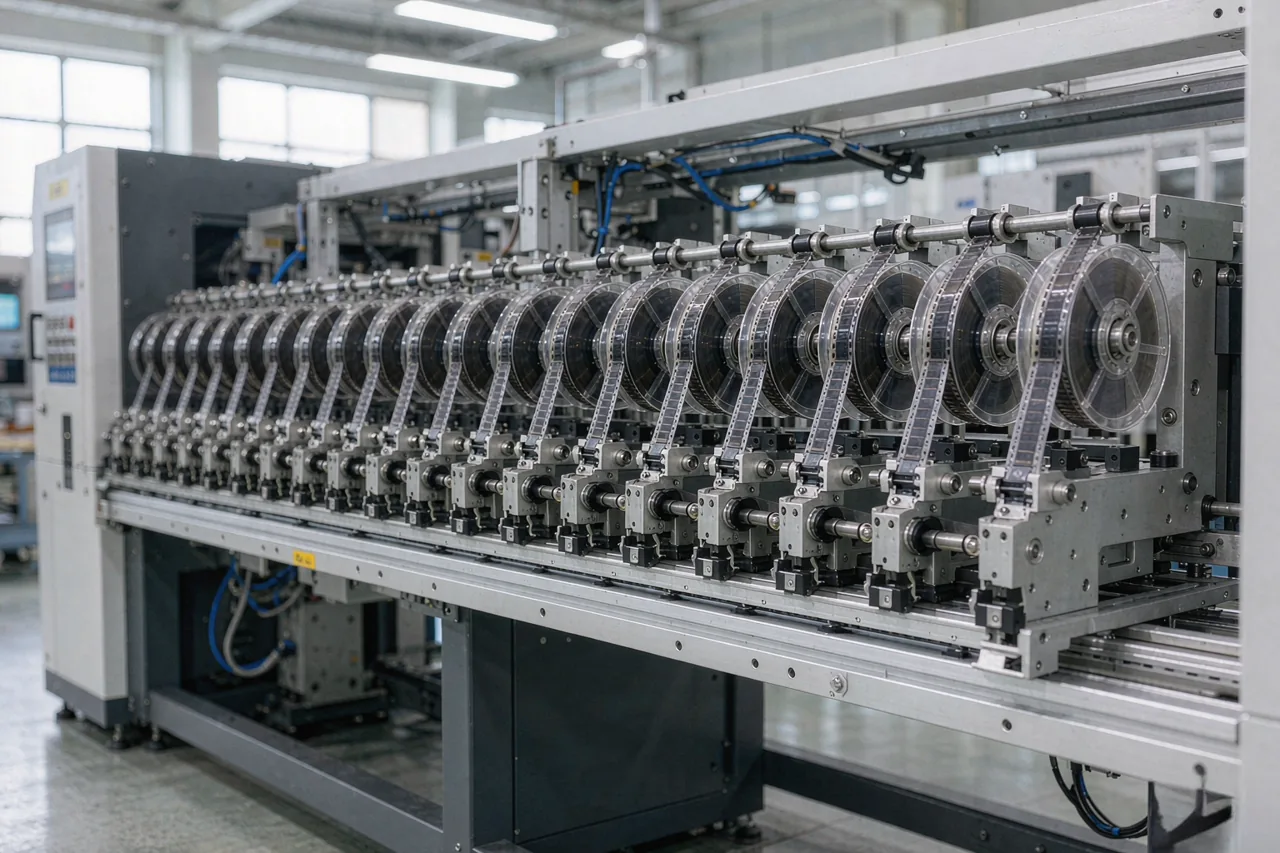
Large PCBs need controlled support from the first transfer point. A bare board that is stacked, lifted or placed by hand can create avoidable variation. The board may enter the conveyor at a different position. The operator may need to pause the line. The next machine may wait for a clean signal.
This is where board handling equipment becomes a process decision. The KL-390VL Vacuum Loader-Feeder is designed for bare board infeed for large PCBs up to 525 x 390 mm. It places bare boards on the conveyor by suction and can also feed from a magazine. For lines using both suction and magazine feeding, this combined approach reduces the need to choose one method for every job.
The unit supports a Max. PCB Size of 525 x 390 mm. Its Magazine Size is 535 x 460 x 565 mm, with Magazine Capacity of 50 PCBs. Vacuum Loader Storage is 100 PCBs. These figures matter during line layout because they define how much board supply sits at the infeed point.
2. Mixed feeding methods need a cleaner interface
Many factories run a mix of bare board stacks and magazine-based flow. A line may receive one batch in a magazine and another as loose boards. Changing the infeed method can require extra equipment, extra setup time or extra handling steps.
The KL-390VL addresses this with automatic board loading and vacuum suction in one machine. It combines vacuum suction loading with magazine feeding. A ball screw lift positions the magazine, and a 25 W magazine transfer motor supports stable board supply. The lift uses a 90 W brake motor with ball screw. Lift Pitch is 10 / 20 / 30 / 40 mm.
For equipment engineers, the value is in the interface: one unit, one control point, one transfer height, and one defined direction. Transfer Direction is Right-to-left / left-to-right. Rail Transfer Height is 900 ±30 mm. These are the details that need to be checked against the upstream and downstream conveyor before an order is released.
3. Floor space pushes equipment toward combined functions
Space-limited SMT lines are common in both mature plants and new regional facilities. A purchaser may have a clear process requirement but only a fixed aisle, a fixed utility point and a fixed line length. Adding separate units for each handling task can make the layout harder to service.
The KL-390VL has Machine Dimensions (L x W x H) of 2100 x 1050 x 1200 ±30 mm. That footprint should be reviewed as part of the complete line drawing, including operator access and magazine movement. The product is listed for space-limited SMT lines because it combines two infeed functions in one frame.
This does not remove the need for layout discipline. Power Supply is 220 V, 50 Hz. Air Supply is 0.4-0.6 MPa. These utility requirements should be confirmed before installation. The point is not that a combined unit fits every plant. It is that combined functions can reduce the number of separate handling positions in the line.
4. Stable transfer matters more than isolated speed
Conveyor speed is often reviewed as a single number. In daily production, the more useful question is whether board transfer stays consistent from infeed through the next process. A flat belt, chain structure, rail design and control method all affect that routine.
The KL-390VL uses a 3 mm flat belt at 9 m/min conveyor speed. It also has dedicated aluminum profile rails and special plastic chains. Control is PLC + color touchscreen, with PLC control with color touchscreen and bidirectional transfer listed as a feature. These are the elements an integrator will check when matching the unit to the SMT line.
The 25 W fixed-speed magazine transfer motor is specified for magazine transfer. The 90 W brake motor with ball screw is specified for magazine lift. Each has a defined role. Together, they support the magazine side of the board supply while the vacuum loader handles bare board placement by suction.
5. Operator work is shifting from loading to control
Manual board loading is still used in many plants. It can work when volumes are low or product changes are frequent. The pressure appears when operators must stay near the infeed point, repeat the same motion, and respond to every board supply interval. That is not a good use of skilled labor in a line with several automated process steps.
With Vacuum loader board storage of 100 PCBs and Magazine capacity of 50 PCBs, the KL-390VL gives the line a defined buffer at the infeed point. The operator can manage batches, check the color touchscreen, and attend to exceptions instead of placing each board by hand.
This is a market trend in plain terms: factories are not removing people from the line. They are moving people away from repetitive handling and toward setup, monitoring and material flow. For PCB handling, that shift starts at the first board transfer.
6. Buying criteria are becoming more specific
For Europe, the US and Southeast Asia, purchasing discussions often start with the same practical items: board size, transfer height, direction, utilities, control interface and available space. A board handling equipment request that lacks these details can lead to rework after the machine arrives.
The KL-390VL gives a clear example of the specification set buyers should expect to review:
- Max. PCB Size: 525 x 390 mm
- Magazine Size: 535 x 460 x 565 mm
- Magazine Capacity: 50 PCBs
- Vacuum Loader Storage: 100 PCBs
- Lift Pitch: 10 / 20 / 30 / 40 mm
- Rail Transfer Height: 900 ±30 mm
- Conveyor Belt: 3 mm flat belt
- Conveyor Speed: 9 m/min
- Transfer Direction: Right-to-left / left-to-right
- Power Supply: 220 V, 50 Hz
- Air Supply: 0.4-0.6 MPa
- Control: PLC + color touchscreen
These are not abstract selling points. They are the inputs needed for line integration. System integrators can use them to confirm conveyor matching, utility readiness and control expectations. Factory purchasers can use them to compare the unit against the actual production requirement. Equipment engineers can use them to plan acceptance checks and operator training.
Where automation fits next
The most useful automation is usually fitted to a clear constraint. For board handling in SMT, that constraint may be a large PCB, a mixed infeed method, a narrow layout, a repeated manual task, or a need for more consistent transfer into the next machine. The trend is toward equipment that solves one or more of these constraints without asking the plant to rebuild the whole line.
The KL-390VL Vacuum Loader-Feeder is relevant here because it is built around two common infeed needs: bare board loading by suction and magazine feeding. It is listed for bare board infeed for large PCBs up to 525 x 390 mm, lines using both suction and magazine feeding, automotive and industrial electronics assembly, and space-limited SMT lines.
That makes it a useful reference point for a broader market discussion. PCB handling is moving from a support item to a line design item. The machines at the start of the SMT line now need the same level of specification review as the process equipment around them.
If you are planning an SMT line upgrade or reviewing PCB handling equipment for a new layout, contact Keli with your requirements. Share your board format, feeding method, transfer direction and site conditions so the KL-390VL can be assessed against your line.