
Key Takeaways
- 1. BMS assembly starts with a stable bare board infeed
- Practical guidance for PCB handling and line automation.
- Specifications below are taken from real Keli equipment.
Battery manufacturing includes more than cell processing. It also depends on controlled electronics assembly: BMS boards, control PCBs, sensing boards, communication boards, and the boards used around module and pack production. These assemblies need the same discipline as other electronics: clean infeed, stable transfer, repeatable orientation, and a clear link between process steps. This is where board handling equipment supports an SMT line. It does not make cells and it does not replace battery process equipment. It moves PCBs into and through assembly in a controlled way.
1. BMS assembly starts with a stable bare board infeed
A Battery Management System assembly begins as a PCB. Before printing, placement, inspection, or reflow, the bare board has to enter the line in a controlled condition. In an SMT line, the infeed point sets the rhythm for downstream equipment. If loading is irregular, operators intervene more often and the line becomes harder to balance.
For battery electronics, this matters because BMS boards often sit inside a larger production flow. They may be assembled in batches, then routed to testing, coating, enclosure assembly, or module-related operations. A board handling module at the front of the line gives the PCB a defined starting point.
The KL-330VL Vacuum Loader-Feeder is one example from Keli’s board-handling range. It combines vacuum suction loading and magazine feeding in one unit. It places bare boards on the conveyor by suction and also feeds from a magazine. This gives SMT lines two infeed options in one machine.
2. Cell-to-board workflows need a clear mechanical boundary
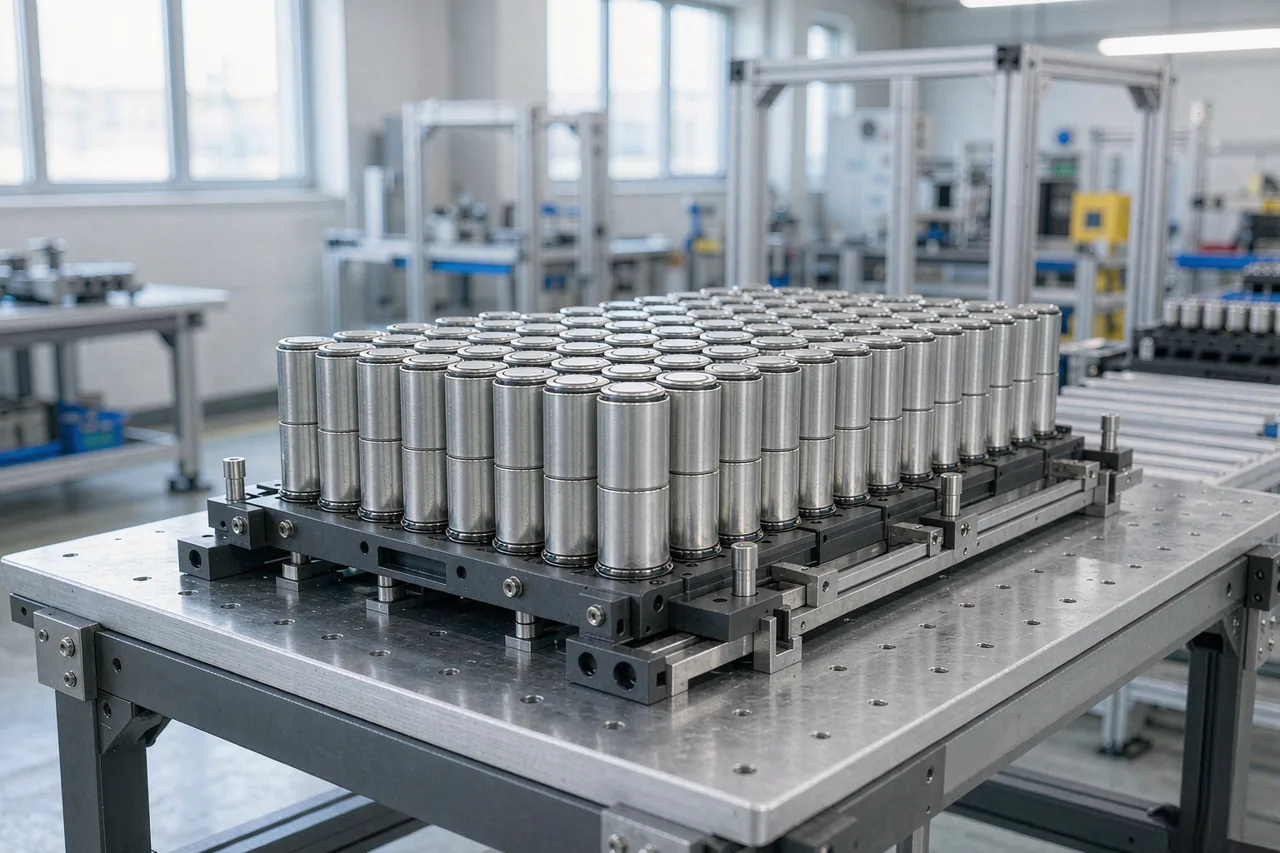
In battery production, people often use the term “cell-to-board handling” to describe the wider link between cell-side processes and electronic control assemblies. The term can cover different layouts. In some plants, boards are assembled in an electronics area and then brought to module or pack operations. In others, PCB assembly is integrated closer to the final assembly flow.
In both cases, the board handling side should stay clearly defined. PCB handling equipment is responsible for board movement, infeed, buffering, and transfer between electronics process steps. It is not a cell machine, a welding station, or a complete battery line. That boundary helps engineers specify interfaces without mixing mechanical, electrical, and process requirements.
A practical layout treats the SMT line as its own controlled segment. Bare boards enter at one end. Assembled boards leave for the next electronics or assembly step. Any later connection to module or pack production is handled through the plant’s material flow, fixtures, traceability system, or manual transfer method. Board handling equipment should support that handoff without adding ambiguity.
3. Magazine and suction feeding solve different loading problems
Battery electronics production is rarely one fixed product mix for the whole factory life. Purchasers and equipment engineers often need to plan for different board formats, batch sizes, packaging methods, and changeover patterns. Infeed method is part of that plan.
Magazine feeding suits boards that arrive in a magazine and need orderly, repeatable presentation to the conveyor. Vacuum suction loading suits bare boards that are presented for suction pickup and placement onto the conveyor. A line that switches between these methods can benefit from a machine that supports both.
The KL-330VL is designed for lines switching between suction and magazine feeding. It has a vacuum loader board storage of 100 PCBs and a magazine capacity of 50 PCBs. A ball screw lift controls magazine position. The lift pitch is 10 / 20 / 30 / 40 mm. These are fixed specifications from the machine data and should be checked against the magazine, board stack, and line layout during integration.
4. Transfer height and direction affect the whole SMT line
PCB handling looks simple until the line is installed. Rail height, transfer direction, conveyor interface, operator access, and upstream or downstream equipment all have to match. A mismatch at the infeed can create manual handling, extra guides, or rework during commissioning.
For the KL-330VL, the rail transfer height is 900 ±30 mm. Transfer direction is right-to-left / left-to-right. The conveyor uses a 3 mm flat belt at 9 m/min. The machine uses dedicated aluminum profile rails and special plastic chains. These details belong in the line layout drawing, not only in the purchase order.
For BMS boards and other battery-related electronics, this is especially useful during line extensions. A plant may add inspection, labeling, dispensing, or test stages over time. If the board handling equipment has defined transfer direction and height, system integrators can plan the mechanical interface with fewer assumptions.
5. Space-limited production areas need compact, defined functions
Battery plants often divide space between cell processing, module assembly, pack assembly, electronics assembly, testing, and logistics. The electronics area may be compact. It still needs board infeed, conveyor transfer, operator access, magazine storage, and maintenance clearance.
The KL-330VL has machine dimensions of 2000 x 920 x 1200 ±30 mm. It supports bare board infeed for 450 x 330 mm boards and is listed for space-limited SMT production lines. Its magazine size is 460 x 400 x 565 mm. These figures should be used when checking floor space, aisle clearance, magazine change access, and upstream or downstream conveyor alignment.
A compact machine does not remove the need for layout discipline. Engineers still need to define where bare boards are presented, where magazines are loaded, where full or empty magazines move, and how operators reach the color touchscreen. The benefit of a combined loader-feeder is that two infeed options sit in one defined footprint instead of being treated as separate equipment decisions.
6. Controls and utilities should be specified early
Board handling equipment is part of the production system, not a standalone accessory. Control method, power, air, and motor configuration affect installation planning and maintenance.
The KL-330VL uses PLC control with a color touchscreen. It has bidirectional transfer. The magazine lift uses a 90 W brake motor with ball screw. The magazine transfer motor is a 15 W fixed-speed motor. Power supply is 220 V, 50 Hz. Air supply is 0.4-0.6 MPa.
These items should be reviewed with the plant’s electrical and facilities teams before installation. For overseas projects, this is also where local site conditions, machine interface standards, documentation needs, and service access are clarified. Keep the discussion practical: utility connection, control handshakes, operator use, and maintenance points. Avoid adding performance claims that are not in the machine specification.
Practical application map for battery electronics
A useful way to specify PCB handling for battery manufacturing is to separate the flow into stages:
- Bare board infeed for BMS boards and related control PCBs.
- Transfer through the SMT line for assembly operations.
- Magazine or suction feeding where the plant uses different board presentation methods.
- Handoff to downstream electronics steps such as inspection, test, or further assembly.
- Interface planning for any later link to module or pack production lines.
This map keeps the scope clear. Keli’s role in this article is board handling capability for PCB assembly and electronics manufacturing. The KL-330VL is a relevant example because it combines automatic board loading and vacuum suction in one machine, with magazine feeding in the same unit. It is not presented as a cell handler, battery machine, or complete battery line.
What purchasers and engineers should ask before ordering
For factory purchasers, the first question is fit: board size, magazine size, transfer height, direction, power, air, and footprint. The KL-330VL data gives fixed values for these points: max. PCB size 450 x 330 mm, magazine size 460 x 400 x 565 mm, rail transfer height 900 ±30 mm, right-to-left / left-to-right transfer, 220 V, 50 Hz, and 0.4-0.6 MPa air supply.
For equipment engineers, the next question is interface: how the loader-feeder connects to the conveyor, how boards are presented, how magazines are changed, and how the touchscreen is used during operation. For system integrators, the question is layout: where the machine sits in the SMT line, how it affects maintenance access, and how the line will handle future changes in PCB handling method.
For battery production projects, add one more question: where does the electronics flow end and the cell, module, or pack flow begin? A clear boundary prevents confusion during design reviews. It also helps each supplier stay within its scope.
Keep the board flow simple and traceable
BMS boards and battery-related electronics need reliable handling because they connect production areas that use different processes. The board handling section should be simple to understand: boards enter, boards transfer, boards leave for the next defined step. When the infeed method, transfer direction, rail height, storage method, and controls are fixed in the specification, commissioning is easier to manage.
Keli’s KL-330VL Vacuum Loader-Feeder shows how one unit can support two infeed options for an SMT line: vacuum suction loading and magazine feeding. That makes it relevant to PCB assembly and electronics manufacturing, including board flows used around battery production. It remains a board handling equipment example, not a claim about battery cell production or complete battery lines.
Contact Keli with your PCB size, magazine requirements, line direction, and layout conditions to discuss the right board handling setup for your requirements.