
Key Takeaways
- Why Board Handling Is Getting More Attention
- Practical guidance for PCB handling and line automation.
- Specifications below are taken from real Keli equipment.
An SMT line rarely stops all at once. More often, one station slows down, another waits, and boards begin to queue on the conveyor. The loss is not always visible in the shift report. It appears as idle time at the placement machine, repeated operator intervention, and extra handling around inspection or test. As electronics manufacturers add more process steps and tighter traceability requirements, PCB handling has become a practical line-balancing issue rather than a simple conveyor choice.
Why Board Handling Is Getting More Attention
Electronics production has changed in ways that put more pressure on board flow. PCBs move through more stations than before. Assembly may include printing, placement, reflow, inspection, test, coating, or final packaging steps. Each station has its own cycle time. Some stop briefly for program checks, material changes, or inspection review. Others continue at a steady pace.
A modern SMT line is only as smooth as its slowest interface. When two connected machines do not run at the same rhythm, the gap becomes a handling problem. A short stop upstream can starve downstream equipment. A short stop downstream can block the line and force boards to accumulate on the transport section.
This is why board handling equipment is now reviewed as part of line design, not as an accessory added after machine selection. Purchasers and engineers look at how boards are transferred, stored, released, and tracked between stations. System integrators also need clear interface rules: transfer direction, conveyor height, board size range, control method, and alarm behavior.
The trend is not about making every station faster. It is about reducing the cost of small mismatches. In high-mix production, those mismatches are part of normal operation. A line that can absorb them without constant manual action is easier to run and easier to scale.
What Drives the Shift Toward Buffering
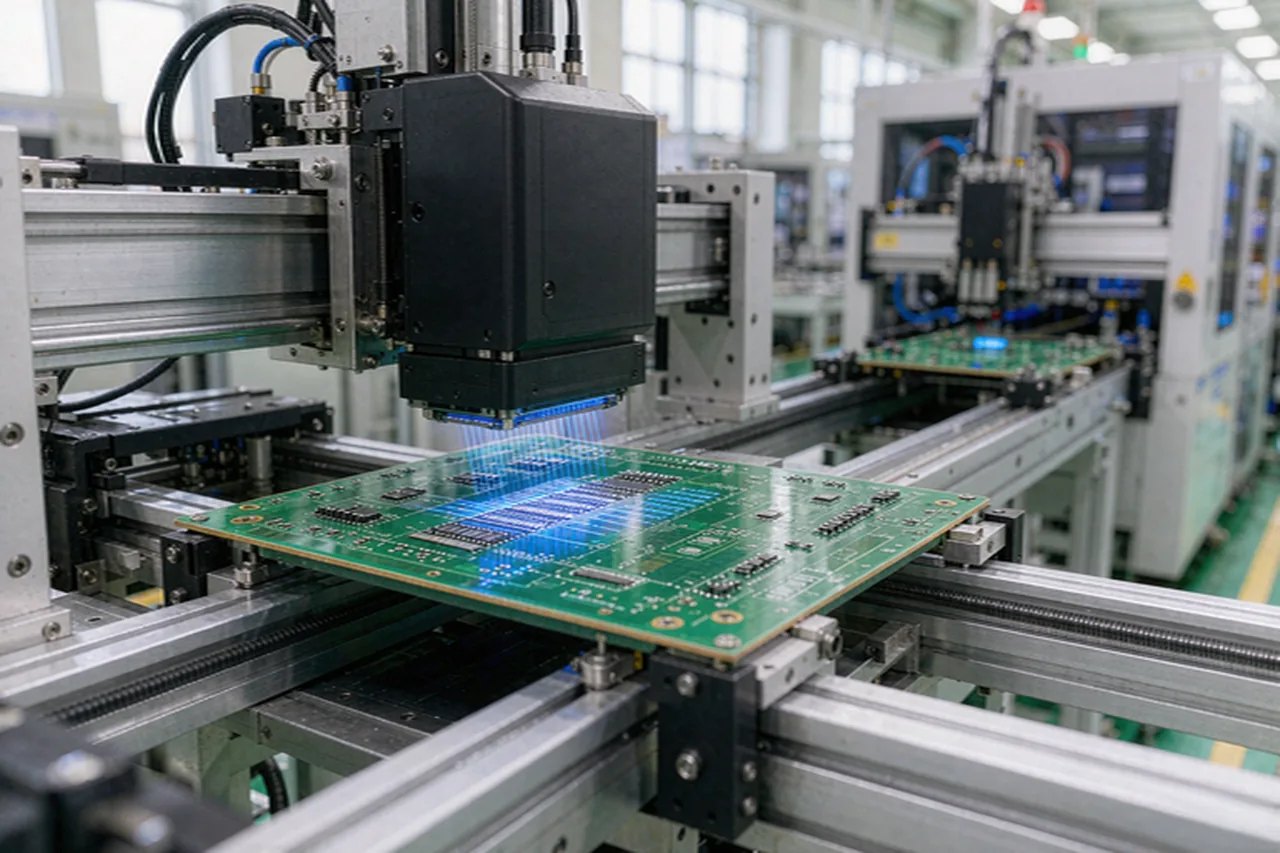
Several practical drivers are pushing factories toward more automated buffering in PCB assembly.
First, product mix is broader. Different board sizes and process routes create different timing patterns. A line that runs one board type continuously behaves differently from a line that changes work orders and recipe settings during the shift.
Second, inspection and test steps create variable release times. Optical inspection, functional test, or manual review can hold a board for a short period. Without a buffer, the upstream process may be forced to wait. With controlled storage, the upstream station can keep producing until the buffer reaches its defined capacity.
Third, labor is used differently. Many factories do not want operators stationed between machines only to manage short queues. Operators are more useful when they handle exceptions, material supply, quality checks, and changeover tasks. Automation fits where the action is repetitive and rule-based: store a board, release the next board, signal an alarm when attention is needed.
Fourth, floor space and layout discipline matter. A buffer needs to fit into the existing SMT line without adding a complex bypass route. Compact, single-lane equipment is often considered where the goal is local line balancing rather than a full material handling system.
Finally, control expectations have become clearer. A buffer is not just a rack with belts. Engineers want defined storage logic, stable transport, and a control system that can communicate alarms. First-in-first-out release is important where production order must be maintained.
Where Pressure Shows on the Factory Floor
The first sign of poor line balance is usually small and repeated. Boards wait at the entrance of a station. A downstream machine finishes a cycle and waits for the next PCB. An operator removes boards by hand to clear a queue. Another operator feeds them back when the line opens. These actions may seem minor, but they interrupt flow and add handling risk.
Pressure also appears around inspection and test stations. If an inspection station pauses for review, boards can back up quickly. If a test station needs a short setup check, upstream equipment may be blocked. In both cases, the issue is not a long stop. It is the lack of a controlled place to hold work in progress.
Manual handling brings additional concerns. Boards may be placed on temporary tables or racks. The production sequence can be lost. Operators may need to judge when to release boards. That judgment can vary by shift. For purchasers, this creates a hidden cost: the line depends on local habits rather than a defined process.
For equipment engineers, another pressure point is interface consistency. Conveyor height, transfer direction, board width range, and belt pitch all affect whether a handling module can be inserted into an existing line. If these basics do not match, the installation becomes a mechanical project instead of a standard integration task.
For system integrators, the control question is just as important. A buffer must store and release according to a clear rule. It must also raise an alarm when a condition needs attention. Without that, the line control system has limited visibility into local work-in-progress.
Where Automation Fits
Automation is most useful when it handles a narrow, repeatable task. In PCB handling, buffering is a good example. The task is simple to define: accept boards from one SMT station, hold them in order, and release them to the next station when needed. The value comes from doing this consistently during short stops and cycle time differences.
A single-track buffer is suited to single-lane buffering between SMT stations. It does not replace a full conveyor network. It also does not solve long process bottlenecks. It gives the line a controlled amount of local storage so that short interruptions do not immediately stop connected equipment.
First-in-first-out control is a key part of this approach. It keeps board order intact between processes. That matters in PCB assembly where production sequence, traceability routines, and downstream test plans may depend on the order in which boards enter a station.
A PLC-controlled buffer also fits standard factory practice. Storage, release, and alarms are handled by the machine control system. A touchscreen gives operators a local interface. An automatic alarm function signals when the equipment needs attention. This is a practical level of automation for many SMT lines: clear logic, limited scope, and no need for a custom software layer at the station level.
A Relevant Example: KL-350D Single-Track PCB Buffer
The KL-350D Single-Track PCB Buffer is an example of this type of board handling equipment. It buffers PCBs between SMT stations on a single track and releases them first-in-first-out. It absorbs differences in station cycle time and keeps the line running during short stops.
The machine stores up to 20 PCBs. It supports a board size of max. 500 mm length and 50-350 mm width. Conveyor height is 900 ±30 mm, with transfer direction available as left-to-right or right-to-left. These are the interface points an engineer would check first when placing the unit into an SMT line.
The KL-350D uses a 750 W servo motor and precision ball screw for the lift. A PLC controls storage, release and alarms, with PLC + touchscreen control and an automatic alarm function. Multi-layer transport belts use 25 or 50 mm pitch, and W3 flat belts support stable board transport.
Machine dimensions are 600 x 1200 x 1700 mm. Power supply is 220 V, 50 Hz. This version has no link conveyor and uses a dedicated aluminum magazine. Those details matter during layout review, especially where the buffer must sit between existing machines without changing the line concept.
Typical applications include single-lane buffering between SMT stations, line balancing in PCB assembly, first-in-first-out board storage, and buffering around inspection and test stations. In each case, the role is specific: hold a defined number of boards, keep their order, and reduce the effect of short timing gaps.
What Buyers Should Check Before Specifying a Buffer
Start with the board envelope. Confirm maximum board length and width range against current and planned work. Check conveyor height and transfer direction against the upstream and downstream stations. Review belt pitch where board support and transport stability are part of the process requirement.
Next, define the reason for the buffer. If the goal is to manage short stops and cycle time differences, a local single-track buffer may fit. If the issue is a long downstream bottleneck, the process itself needs review. Buffering can absorb variation, but it does not remove a structural capacity constraint.
Then review control expectations. Confirm how storage and release are managed. Confirm what conditions trigger an alarm. Confirm how operators will interact with the touchscreen during normal running and recovery. For system integrators, these points should be documented in the line interface specification.
Finally, consider the physical layout. Machine dimensions, power supply, and the absence or presence of a link conveyor affect installation planning. The KL-350D is specified with no link conveyor and a dedicated aluminum magazine, so this should be clear at the layout stage.
A Practical View of the Trend
Board handling automation in SMT is moving toward focused modules with clear tasks. Factories are not looking for complexity for its own sake. They want stable PCB handling, defined release logic, and fewer manual interventions between stations.
The cost of uneven cycle times is often hidden in small waits and repeated operator actions. A buffer does not change the process recipe or increase machine speed. It gives the SMT line a controlled place to hold work in progress. That is why buffering around inspection, test, and other variable stations remains a practical part of line balancing.
For purchasers, the decision is less about a standalone machine and more about fit: board size, conveyor height, transfer direction, control method, alarm behavior, and available floor space. When those points are defined early, board handling equipment can be integrated as a normal part of the line rather than a late correction.
If you are reviewing an SMT line with short stops, local queues, or uneven station timing, contact Keli with your board size, transfer direction, layout, and buffering requirements.