Line output rarely matches the number on the fastest machine's data sheet. Boards pile up before one station while the machines before and after it sit idle. That pattern points to a bottleneck, and finding it is the first step to fixing it.
Key Takeaways
- The slowest step sets the pace for the entire line.
- Measure real cycle time at each station before changing anything.
- A buffer before and after the slow step absorbs short stops.
- FIFO buffering keeps board order and traceability intact.
1. Recognize the symptoms
Two signs show up again and again. Boards collect ahead of a single station while adjacent machines wait. And total output stays flat no matter how the line is balanced on paper. Work in progress grows on the floor, but finished units do not.
2. Find the real cause
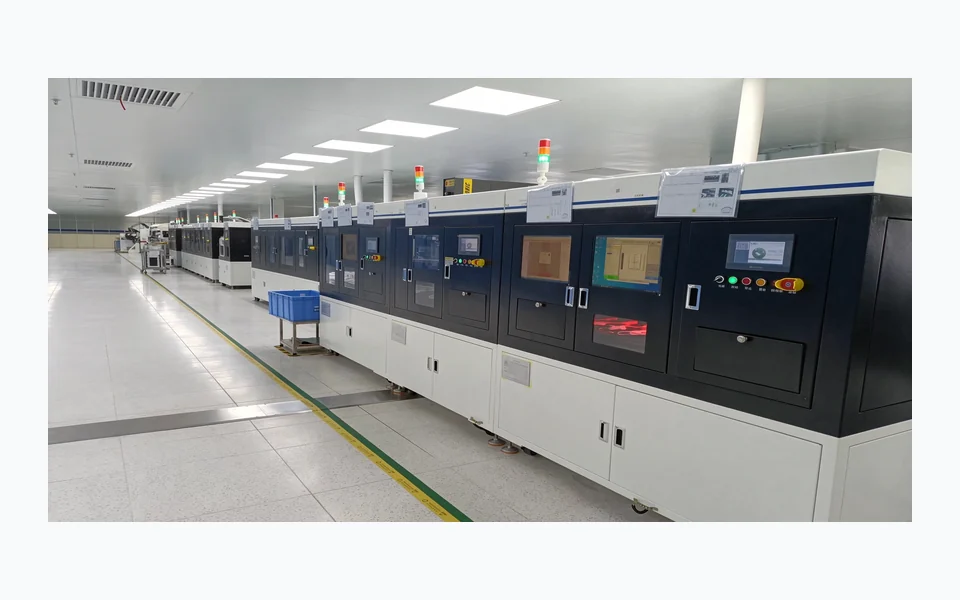
Process steps run at different cycle times. A machine that takes longer than its neighbours sets the pace for everything upstream and downstream. Bottlenecks also appear where a fast machine feeds a slower one with no buffer between them. In that layout, every short stop at the slow station immediately stalls the fast one.
3. What it costs
Every upstream pause is amplified at the bottleneck, and every downstream stop backs boards up toward the loader. The result is higher work in progress, longer lead times and output that never reaches the line's theoretical rate. On short runs, the lost time is hard to recover.
4. Add a buffer at the right point
Measure the real cycle time of each station first. Then place a buffer conveyor before and after the slow step so the difference is absorbed. A buffer lets the fast machine keep running during a short downstream stop, and releases boards in sequence when the line recovers.
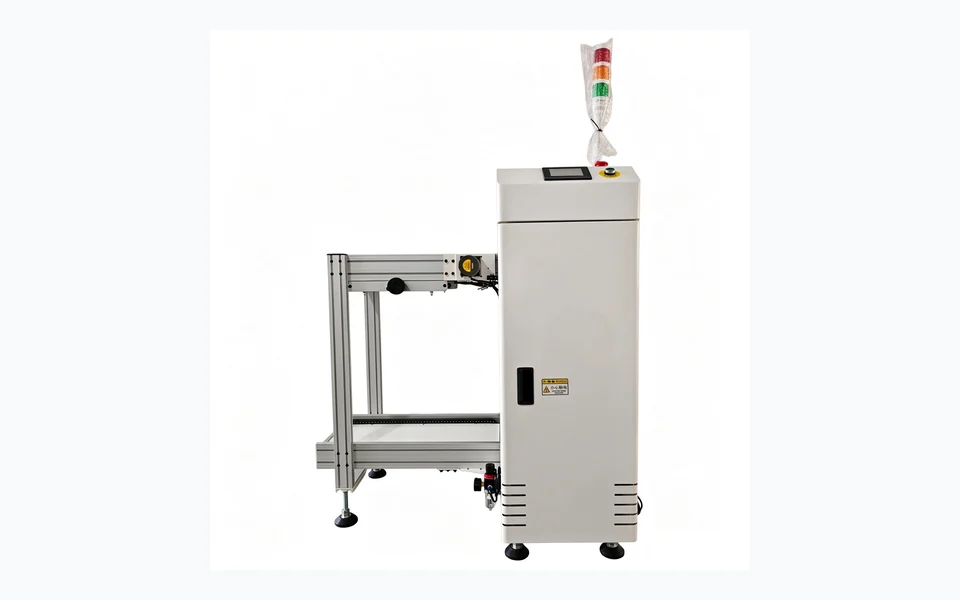
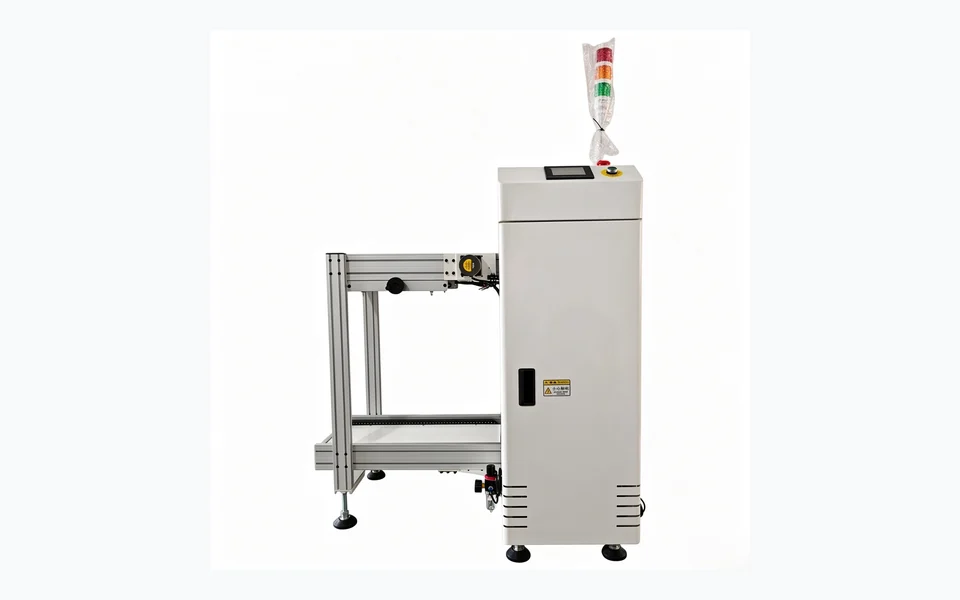
The KL-350C High-Efficiency PCB Buffer is built for this role. Boards enter a multi-layer magazine and leave first-in-first-out, so order is preserved.
- Board size: max. 500 mm length; 50–350 mm width
- Storage capacity: 20 PCBs
- Belt pitch: 25 / 50 mm selectable
- Conveyor height: 900 ±30 mm
- Lift motor: 750 W servo with precision ball screw
- Transfer direction: left-to-right / right-to-left
- Control: PLC + touchscreen, auto alarm
5. Verify the fix
After adding the buffer, track output over a full shift, not minutes. A correct placement raises finished units while work in progress stops climbing. If output still plateaus, the bottleneck has moved to a different station and the measurement step should be repeated.
Summary
A bottleneck is a flow problem, not a machine problem. Find the slow step with real cycle-time data, protect it with first-in-first-out buffering, and the whole line runs smoother. We match buffer size and conveyor height to your boards and line layout. Talk to our engineers →
Related reading
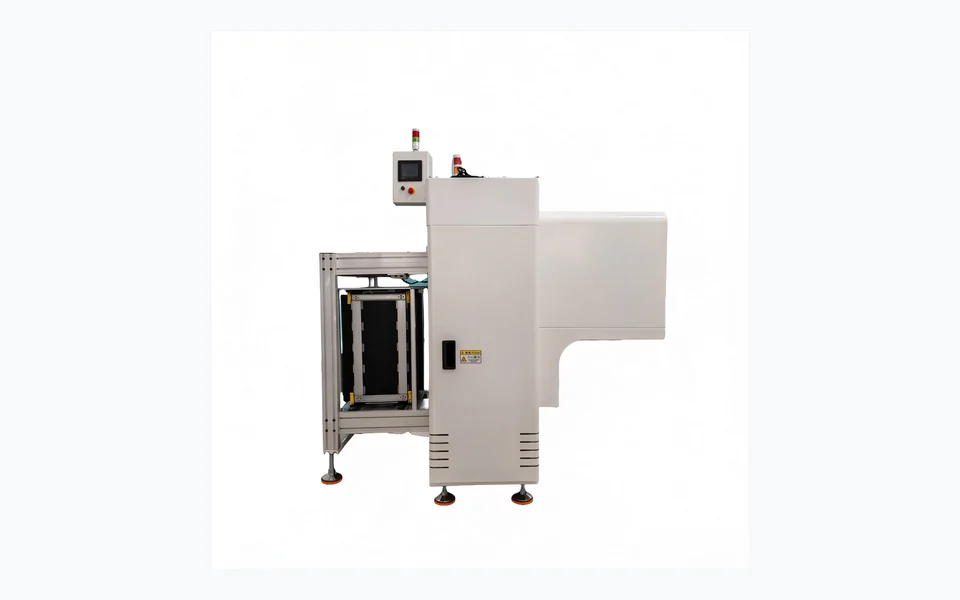
Why Factories Add a KL-330NU OK/NG Unloader
Read more →
How Solid-State Battery Equipment Helps
Read more →